
 Save to Pinterest
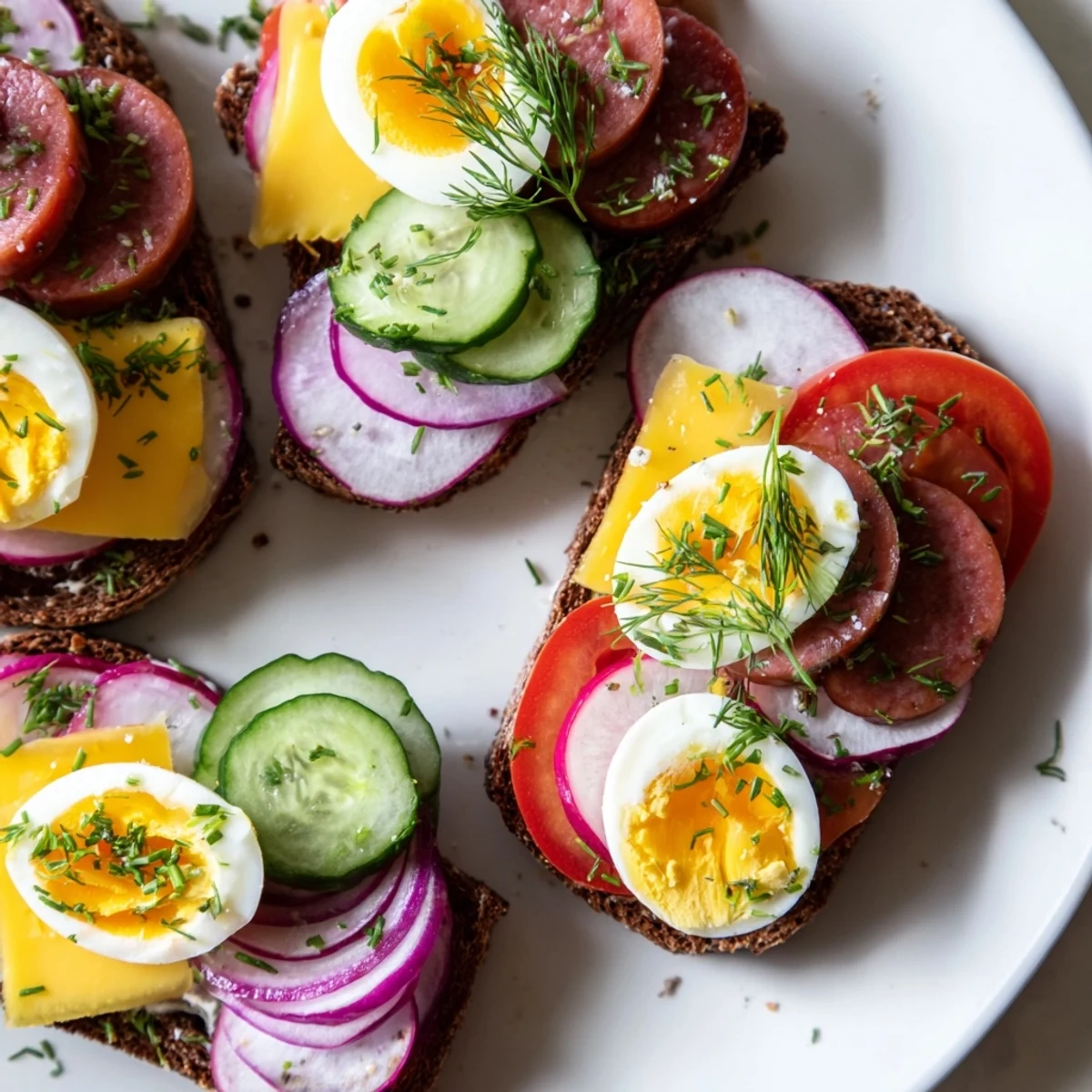
 Open-faced Polish kanapki are a beloved staple of Polish cuisine, featuring slices of hearty rye bread generously topped with an array of savory ingredients.
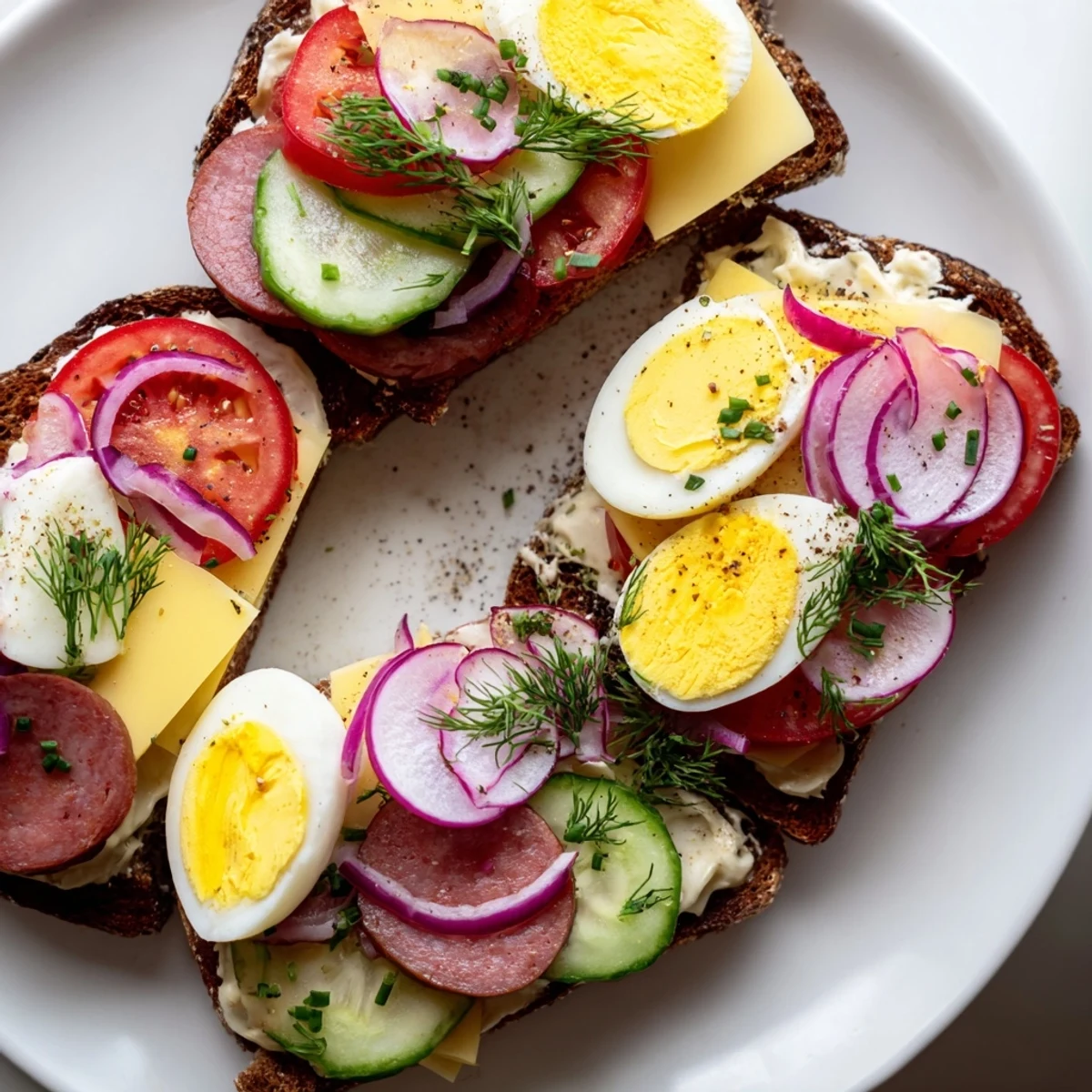
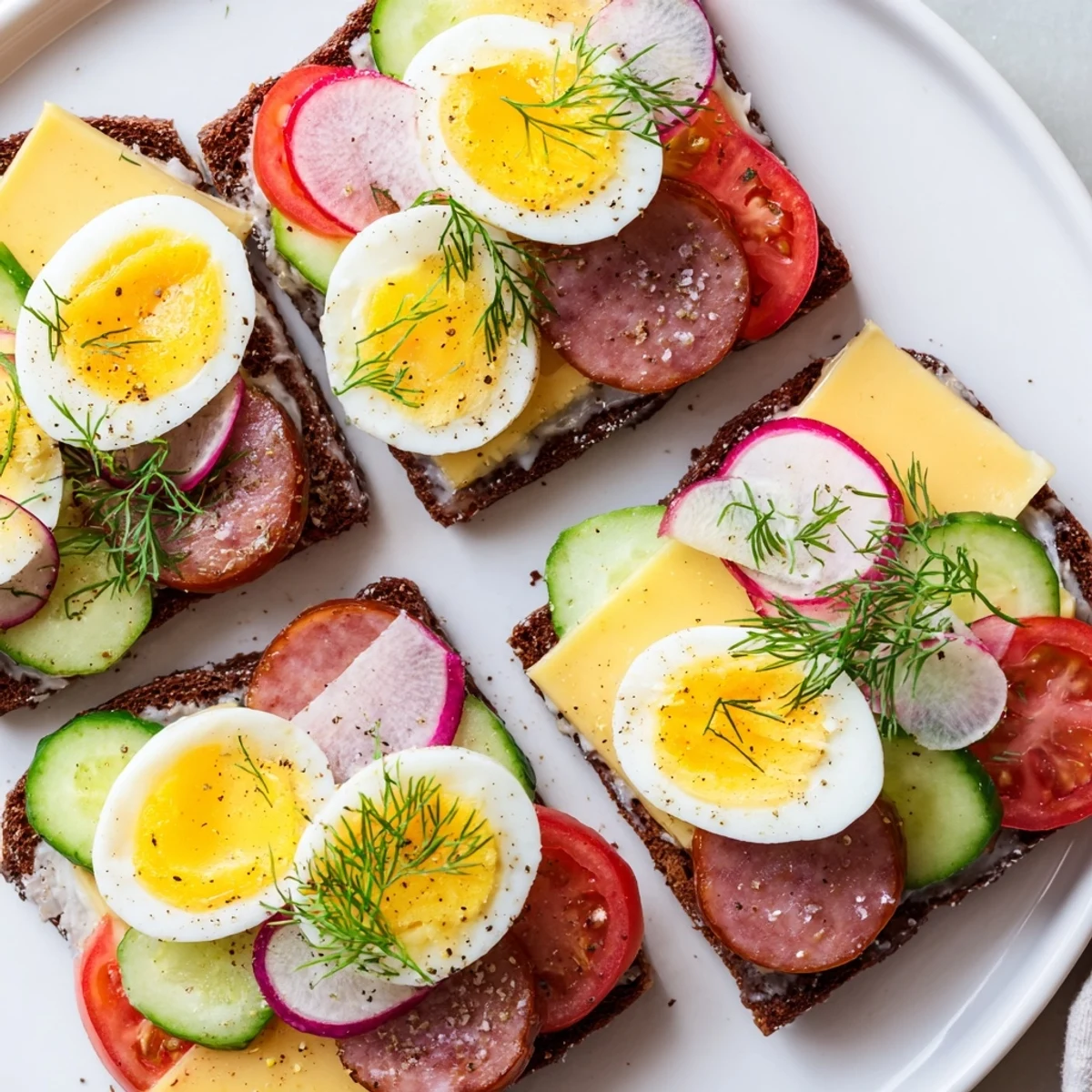
Each sandwich is built on a foundation of buttered bread, then layered with your choice of kielbasa, smoked ham, cooked egg, or melted cheese, and finished with vibrant fresh vegetables like tomatoes, cucumbers, radishes, and red onion.
Ready in just 15 minutes with no cooking required, these colorful sandwiches make an excellent appetizer for parties, a satisfying breakfast, or a quick lunch. Garnished with fresh chives or dill, they bring authentic Polish flavors to your table with minimal effort.
My babcia would line up open faced sandwiches on a wooden board every Sunday morning, each one a tiny edible portrait of whatever she had in the fridge that week.
I once brought a platter of these to a friend's potluck expecting them to disappear as a side dish, but they stole the whole show and people kept asking what restaurant I ordered them from.
Ingredients
- 8 slices rye bread or baguette: Rye is traditional and holds up beautifully under toppings without getting soggy.
- 3 tbsp unsalted butter, softened: Let it sit out so it spreads without tearing the bread.
- 2 tbsp cream cheese (optional): A lighter alternative to butter that works especially well with vegetable toppings.
- 4 slices kielbasa or smoked ham: The smoky, savory anchor of a classic Polish kanapka.
- 4 slices cooked egg: Adds a gentle richness and a pop of yellow that looks gorgeous on the plate.
- 4 slices yellow cheese (Edam or Gouda): Choose something mild so it complements rather than competes with the meats.
- 1 tomato, thinly sliced: Pat the slices dry with a paper towel to prevent sogginess.
- 1 small cucumber, thinly sliced: Leave the skin on for color and a satisfying crunch.
- 1/4 red onion, thinly sliced: Soak the slices in cold water for five minutes if you want a milder bite.
- 8 radishes, thinly sliced: Their peppery snap is what makes these feel authentically Polish.
- Fresh chives or dill, chopped: Dill is the soul of Polish cooking, so never skip it if you can help it.
- Salt and freshly ground black pepper: Just a pinch on each sandwich wakes everything up.
Instructions
- Prepare your canvas:
- Lay all eight bread slices on a clean cutting board and take a moment to appreciate how something so simple is about to become beautiful.
- Spread the base:
- Use a butter knife to cover each slice evenly with softened butter or cream cheese, going all the way to the edges like you are frosting a tiny cake.
- Layer the heart:
- Arrange your protein or cheese on each slice, giving each sandwich its own identity, some with kielbasa, some with egg, some with just cheese for anyone keeping it light.
- Crown with freshness:
- Fan out the tomato, cucumber, onion, and radish slices on top, overlapping them slightly so every bite has crunch and color.
- Finish with flair:
- Sprinkle each open faced sandwich with salt, pepper, and a generous shower of chopped dill or chives, then step back and admire your work before serving immediately.
 Save to Pinterest
 The most magical thing about kanapki is how they turn leftovers and pantry staples into something that feels deliberate and celebratory.
Making It Your Own
Part of the charm is that there is no single correct combination, so treat each slice as a chance to experiment with whatever catches your eye at the market.
Serving and Pairing
Arrange them on a cutting board or ceramic platter with a small bowl of extra pickles on the side and watch how people gravitate toward them before anything else on the table.
Storage and Leftovers
These are genuinely best eaten fresh, but if you must prepare ahead, store the components separately and assemble right before serving.
- Keep sliced vegetables in a container lined with paper towels in the refrigerator.
- Wrap bread tightly so it does not dry out or absorb fridge odors.
- Never store assembled sandwiches overnight or you will end up with something sad and damp.
 Save to Pinterest
 Every time I make these, I think of long kitchen tables, strong tea, and the belief that good food does not need to be complicated to be memorable.
Recipe FAQ
- → What type of bread works best for Polish kanapki?
-
Traditional Polish kanapki are typically made with dense, hearty rye bread, which provides a sturdy base that holds up well under generous toppings. A fresh baguette, sourdough, or wholegrain bread also works beautifully as alternatives.
- → Can I prepare kanapki ahead of time for a party?
-
It's best to assemble kanapki shortly before serving to keep the bread from becoming soggy. You can prepare all toppings and spreads in advance and store them separately, then assemble everything right before your guests arrive for the freshest results.
- → What are traditional toppings for authentic kanapki?
-
Classic Polish kanapki feature a variety of toppings including sliced kielbasa, smoked ham, hard-cooked eggs, yellow cheeses like Edam or Gouda, fresh tomatoes, cucumbers, radishes, and red onion. Fresh herbs such as dill or chives are essential finishing touches.
- → Are kanapki served warm or cold?
-
Polish kanapki are typically served at room temperature or chilled. Since all the ingredients are pre-cooked or raw, no heating is required. This makes them incredibly convenient for buffets, picnics, and casual gatherings.
- → How do I keep the bread from getting soggy?
-
Spread a layer of butter or cream cheese on the bread before adding toppings to create a moisture barrier. Also, pat wet vegetables like tomato slices dry with a paper towel before placing them on the bread. Assemble as close to serving time as possible.
- → Can I make vegetarian versions of kanapki?
-
Absolutely. Simply skip the kielbasa and ham, and focus on toppings like sliced hard-cooked eggs, various cheeses, and an abundance of fresh vegetables. Marinated mushrooms, roasted peppers, and pickles are also excellent vegetarian additions.