
 Save to Pinterest
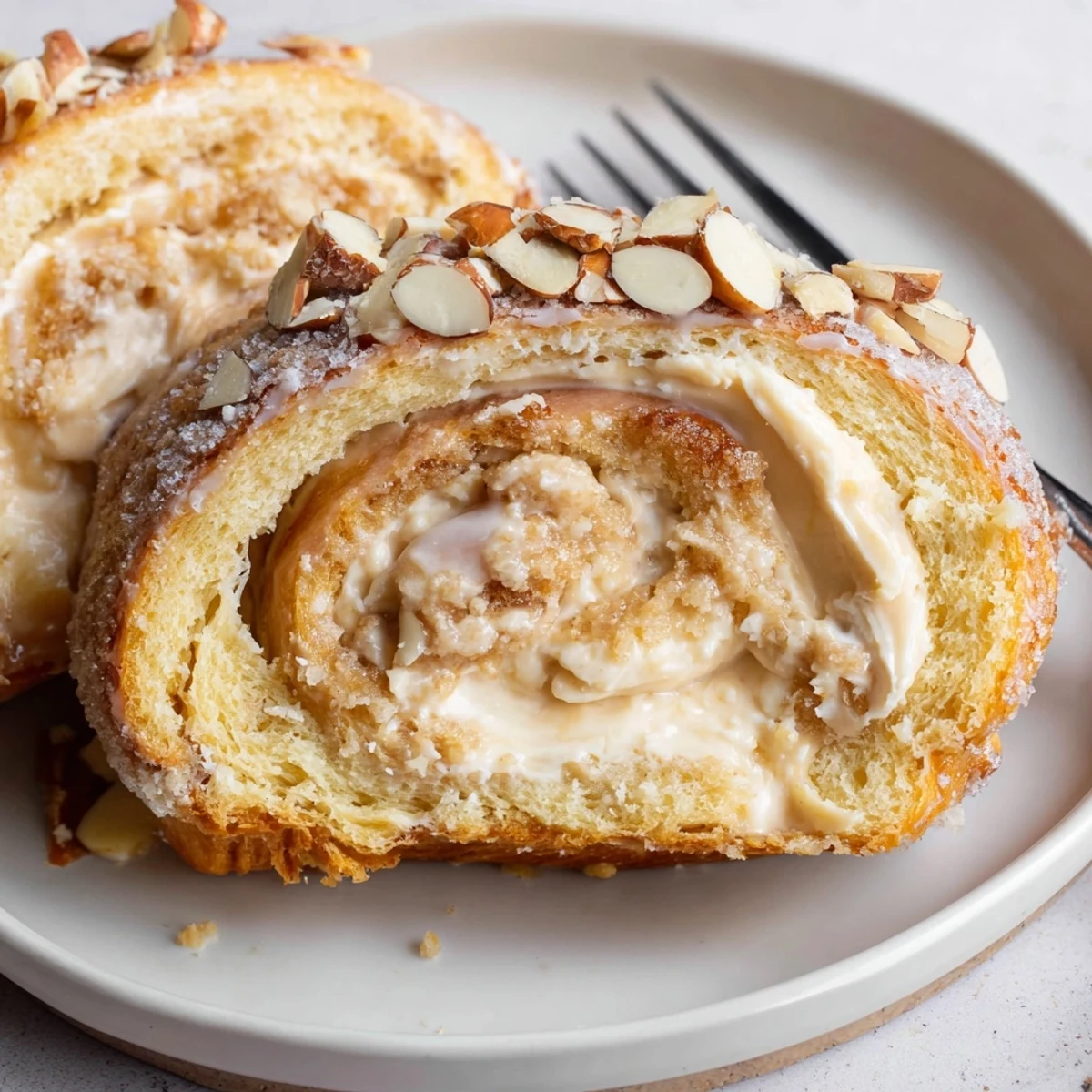
 These soft, pillowy almond cream cheese rolls start with an enriched yeast dough kneaded until smooth, left to double, then rolled out and spread with a sweet cream cheese and chopped almond filling. Tightly rolled, sliced into 12, and proofed briefly before baking to golden brown. Warm rolls get a simple almond glaze and toasted almond garnish. Serve fresh; reheat gently. Add cinnamon or swap nuts for variation.
My neighbor brought over a plate of something wrapped in foil one December morning, and when I unwrapped it, the almond scent hit me before I even saw what was inside. These golden swirled rolls with their cream cheese centers were gone within ten minutes, and I stood in my kitchen afterward wondering if it would be rude to knock on her door and ask for more. Instead, I called her that evening and she laughed, telling me they were easier than I thought. She was right about that part, though my first batch looked nothing like hers.
I made these for a brunch potluck last spring and arrived late because I kept sneaking one more roll from the pan in my car. My friend Margot pulled me aside and whispered that I needed to bring these every single time, and honestly, that specific bit of praise meant more to me than any compliment I have ever received on a dinner party.
Ingredients
- All purpose flour (3 1/4 cups): Spoon and level it rather than scooping directly, because packed flour will leave you with dense rolls that never quite rise the way you want.
- Granulated sugar (1/4 cup for dough, 1/3 cup for filling): The dough itself is only lightly sweetened, which lets the filling and glaze carry the dessert quality.
- Active dry yeast (2 1/4 tsp): Check the expiration date, because expired yeast is the fastest way to flat, sad rolls and a wasted afternoon.
- Salt (1/2 tsp): Do not skip this, as salt quietly supports every other flavor in the dough.
- Whole milk, warmed (1/2 cup): It should feel like warm bath water, not hot enough to kill the yeast.
- Water, warmed (1/4 cup): Combined with the milk, this gives the dough enough moisture without making it too rich.
- Unsalted butter, softened (1/4 cup): Softened means it yields when you press it, not melted into a puddle.
- Large egg (1): Adds richness and helps bind the dough together beautifully.
- Cream cheese, softened (8 oz): Leave it out on the counter for at least an hour, because cold cream cheese will tear your dough and leave ugly lumps in the filling.
- Pure almond extract (1/2 tsp for filling, 1/2 tsp for glaze): A little goes a long way, and it is the soul of this entire recipe.
- Finely chopped almonds (1/2 cup): Pulse them in a food processor rather than chopping by hand for a more even texture in every bite.
- Powdered sugar (1 cup): Sift it before whisking into the glaze to avoid any stubborn lumps.
- Milk for glaze (2 tbsp): Add it gradually until the glaze reaches a consistency that drizzles in thick ribbons.
- Sliced almonds, toasted (1/4 cup): Toast them in a dry pan for two minutes and watch closely, because they go from golden to burnt in seconds.
Instructions
- Wake up the yeast:
- In a large bowl, whisk together the flour, sugar, yeast, and salt until evenly distributed. Warm the milk, water, and butter together in a saucepan or microwave until the butter melts and the mixture feels comfortably warm to your finger, then pour it into the dry ingredients along with the egg.
- Build the dough:
- Knead by hand or with a stand mixer on medium speed for six to eight minutes until the dough pulls away from the bowl edges and feels smooth with just a slight tackiness when you poke it.
- Let it rise:
- Transfer the dough to a lightly greased bowl, cover it with a damp towel or plastic wrap, and tuck it somewhere warm for about an hour until it has doubled in size and looks puffy and alive.
- Make the filling:
- Beat the softened cream cheese, sugar, and almond extract together until completely smooth with no pale streaks remaining, then fold in the chopped almonds so they are evenly scattered throughout.
- Shape the rolls:
- Punch down the risen dough and roll it out on a floured surface into a rectangle roughly sixteen by ten inches, then spread the filling edge to edge in an even layer before rolling it up tightly from the long side like a carpet.
- Slice and arrange:
- Cut the log into twelve equal pieces using a sharp knife or unflavored dental floss, then nestle them into a greased nine by thirteen inch baking dish, cover loosely, and let them puff up for another thirty minutes.
- Bake to golden:
- Preheat your oven to 350 degrees Fahrenheit and bake the rolls for twenty two to twenty five minutes until the tops are deeply golden and the edges bubble slightly, then let them cool for about ten minutes.
- Glaze and finish:
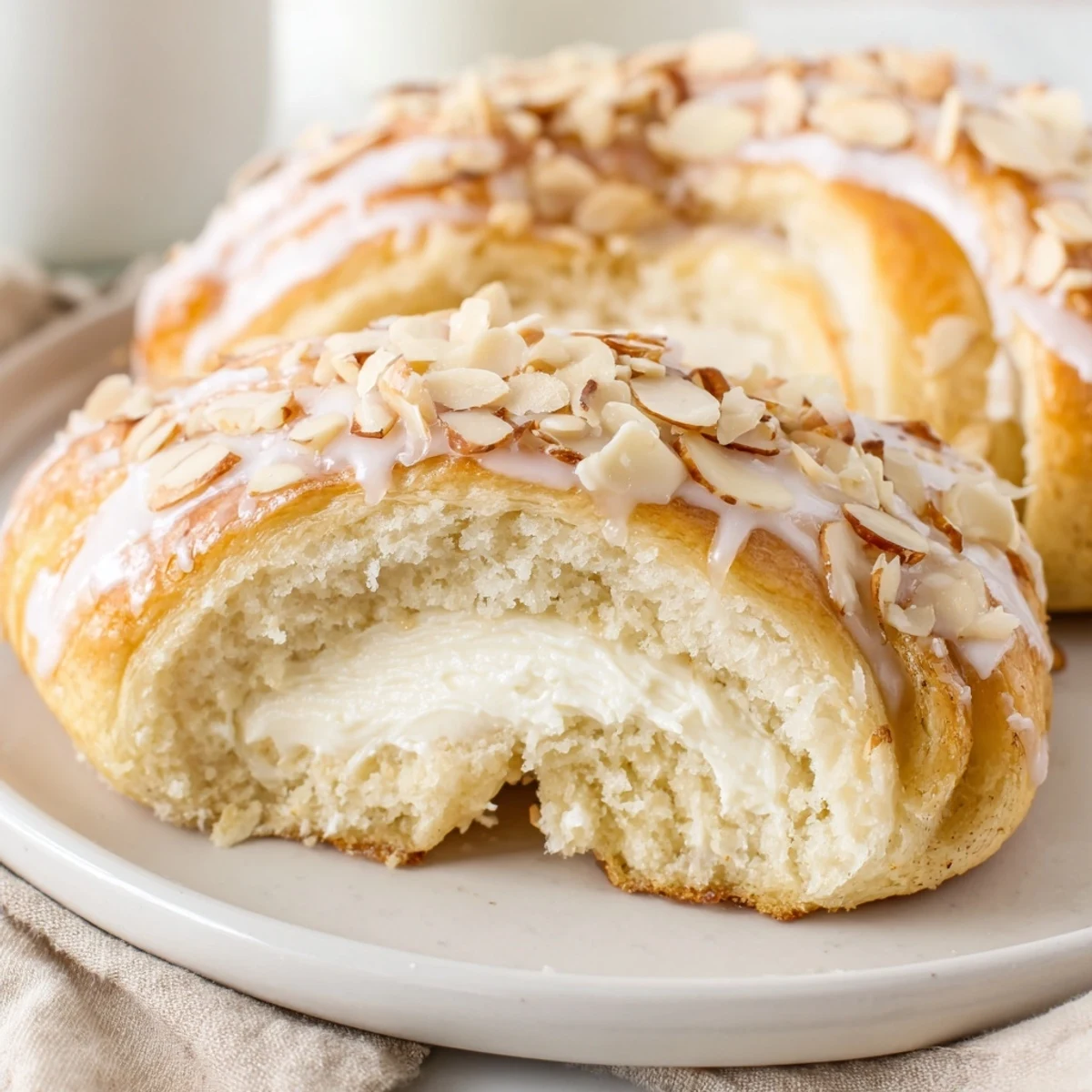
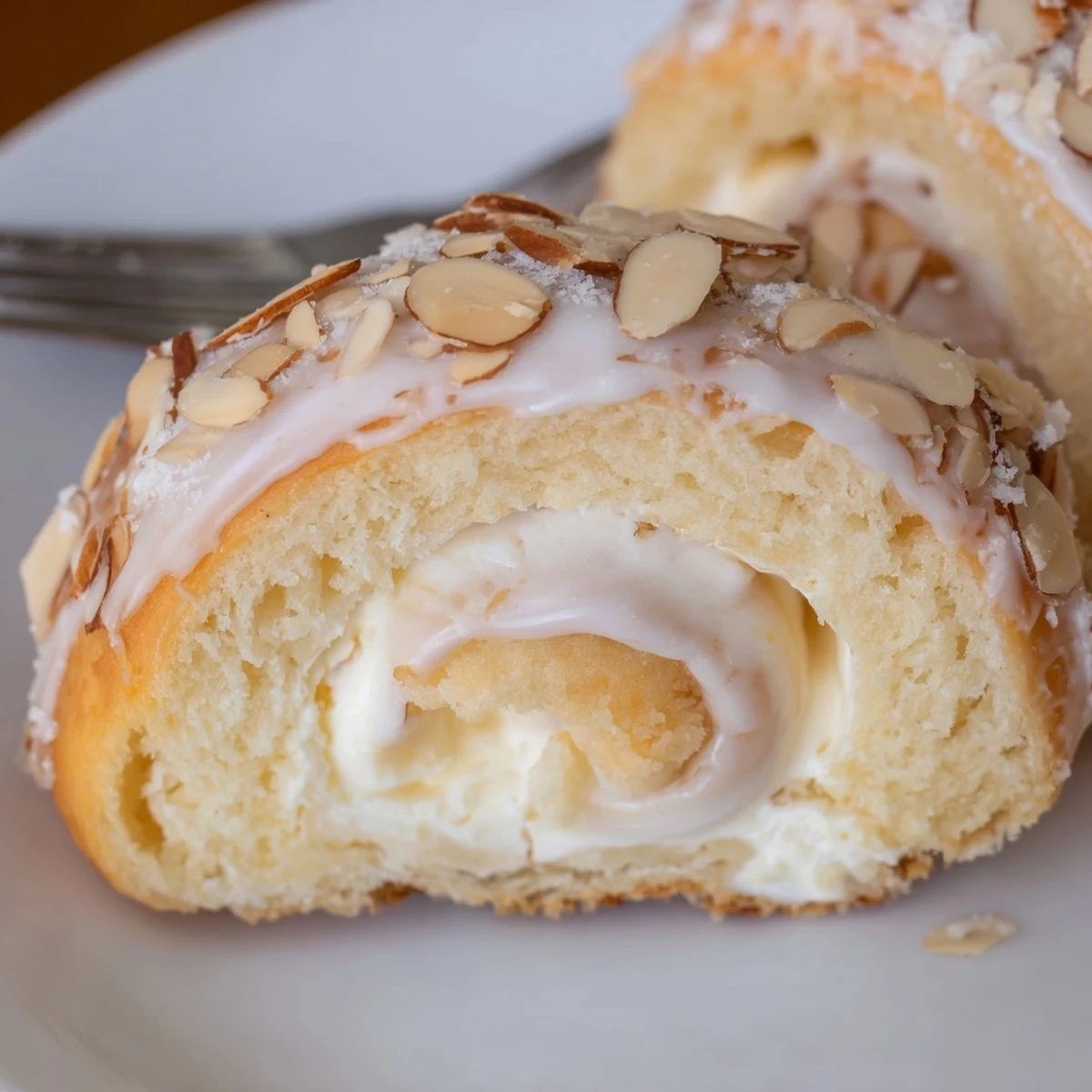
- Whisk the powdered sugar, milk, and almond extract into a smooth glaze, drizzle it generously over the warm rolls, and scatter the toasted sliced almonds on top before the glaze sets.
 Save to Pinterest
 The morning I finally got these rolls right, my daughter sat on the kitchen counter in her pajamas and ate two before I even finished glazing the rest.
Storing and Reheating Leftovers
These rolls are at their absolute best within a few hours of baking, but if you have leftovers, cover the pan tightly and keep them at room temperature for up to two days. To reheat, pop individual rolls in the microwave for about fifteen seconds, which softens the filling and makes the glaze slightly gooey again in a way that tastes almost fresh from the oven.
Playing With Variations
Once you feel confident with the basic recipe, try adding a quarter teaspoon of cinnamon to the filling for a spiced twist that pairs beautifully with the almond extract. You can also swap the chopped almonds for pecans or walnuts if that is what you have in the pantry, and the rolls will take on a completely different personality while keeping the same comforting structure.
Getting Ahead for Brunch
You can prepare the rolls through the slicing step, arrange them in the pan, cover tightly with plastic wrap, and refrigerate overnight for a stress free morning. Pull them out about forty five minutes before you want to bake so they can come to room temperature and complete their second rise while your coffee brews.
- Do not glaze the rolls until right before serving, because the glaze seeps into the tops if they sit too long.
- If the refrigerated dough has not puffed enough after forty five minutes, give it another fifteen in a warm spot.
- Always line your baking dish with parchment if you plan to transport them, because the filling sticks stubbornly to bare glass.
 Save to Pinterest
 Every time I bake these rolls, the kitchen smells like the kind of morning worth waking up early for, and honestly that is reason enough to make them again.
Recipe FAQ
- → How do I keep the rolls soft after baking?
-
Store cooled rolls in an airtight container at room temperature for up to 2 days. Reheat briefly in the microwave (15–20 seconds) or in a low oven wrapped in foil to refresh the crumb without drying.
- → Can I substitute the almonds with other nuts?
-
Yes. Chopped pecans or walnuts work well for a different texture and flavor; toast them lightly to boost aroma. Reduce size of pieces for more even distribution in the filling.
- → How do I know when the dough is properly kneaded?
-
When kneaded 6–8 minutes the dough should be smooth, slightly tacky but not sticky, and pass a gentle stretch test—thin without tearing immediately. Over-kneading will make rolls tight, under-kneading leads to dense crumb.
- → Can I prepare these ahead and freeze them?
-
Yes. Arrange unbaked, sliced rolls in the pan, wrap tightly, and freeze. Thaw and proof before baking. Baked rolls also freeze well; thaw and warm gently before glazing.
- → Why might my rolls turn out dense?
-
Common causes are underproofing, too much flour, or insufficient kneading. Ensure the dough doubles in a warm spot, measure flour accurately, and allow a final short proof after shaping before baking.
- → Best way to toast sliced almonds without burning?
-
Toast in a dry skillet over medium-low heat, stirring constantly until golden and fragrant, or spread on a baking sheet and bake at 325°F (160°C) for 5–8 minutes, checking frequently.