
 Save to Pinterest
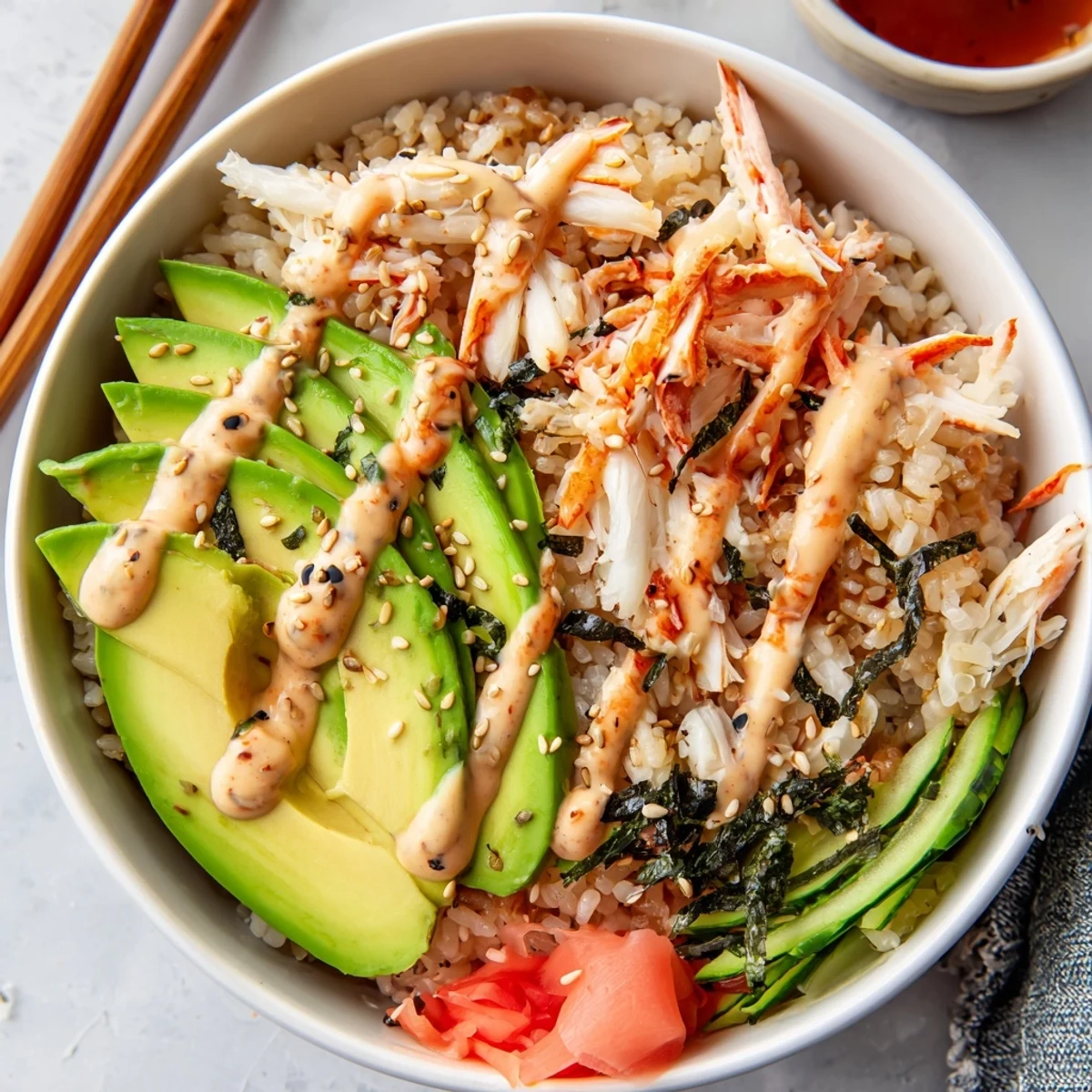
 This deconstructed California roll brings seasoned sushi rice together with shredded surimi, creamy avocado, crisp cucumber, and nori strips for instant sushi satisfaction. Cook and season the rice, mix a quick spicy mayo, arrange toppings over the rice, and finish with sesame seeds and pickled ginger. Quick swaps like real crab, shrimp, or tofu and add-ins such as edamame or radishes keep it versatile - serves four in about 40 minutes.
The fan in my kitchen was broken the afternoon I discovered deconstructed sushi bowls, which turned out to be a blessing because my tiny apartment would have never survived the heat of a rolling mat session anyway. I had been craving California rolls for weeks but the thought of perfecting rice rolls in August humidity felt like a losing battle. That is when it hit me: everything I loved about that roll could just live in a bowl instead. No rolling, no stressing, just rice and toppings and pure satisfaction.
My roommate walked in while I was fanning vinegar seasoned rice on a sheet pan and asked if I had lost my mind. Ten minutes later she was standing next to me with a bowl, drizzling spicy mayo like she had invented the concept herself. We ate standing at the counter, barely speaking, which is the highest compliment in our shared kitchen.
Ingredients
- Sushi rice: The backbone of the whole bowl, and you really do need the short grain variety here because long grain rice will not clump and will slide around when you try to eat it.
- Rice vinegar, sugar, and salt: This trio is what makes sushi rice taste like sushi rice, so do not skip or substitute with regular white vinegar which is too harsh.
- Imitation crab sticks: Classic California roll energy right here, affordable and easy to shred with your fingers for that signature texture.
- Avocado: Pick one that yields slightly when pressed but is not mushy, because you want clean slices that hold their shape on top of the rice.
- Cucumber: Adds crunch and freshness that cuts through the richness of the mayo and avocado beautifully.
- Nori sheets: Cut these into thin strips with scissors for that ocean flavor without needing to wrap anything.
- Toasted sesame seeds: They add a nutty finish that ties everything together, and toasting them yourself in a dry pan takes about one minute.
- Kewpie mayonnaise: Richer and more tangy than regular mayo, this is worth seeking out for the spicy mayo drizzle.
- Sriracha: Optional but I always add it because the gentle heat balanced with creamy mayo is what makes these bowls addictive.
- Carrot: Julienned thin for color and crunch, completely optional but it makes the bowl look restaurant quality.
- Pickled ginger and soy sauce: Serve on the side for dipping and palate cleansing between bites.
Instructions
- Wash and cook the rice:
- Rinse the sushi rice under cold running water, swishing it with your hand until the water turns from cloudy to mostly clear. Combine with water in a saucepan, bring it to a boil, then drop the heat to low, slap on the lid, and let it steam undisturbed for fifteen minutes before removing from heat and resting covered for ten more minutes.
- Season the rice:
- Stir rice vinegar, sugar, and salt together in a small bowl until fully dissolved, then gently fold the mixture into the hot rice using a cutting motion rather than stirring, which keeps the grains intact. Let the rice cool to room temperature before building your bowls.
- Mix the spicy mayo:
- Stir mayonnaise and sriracha together in a small bowl until evenly blended, tasting as you go to find your preferred heat level. A one to one ratio is bold but you can dial it back with more mayo if you prefer a gentler kick.
- Build each bowl:
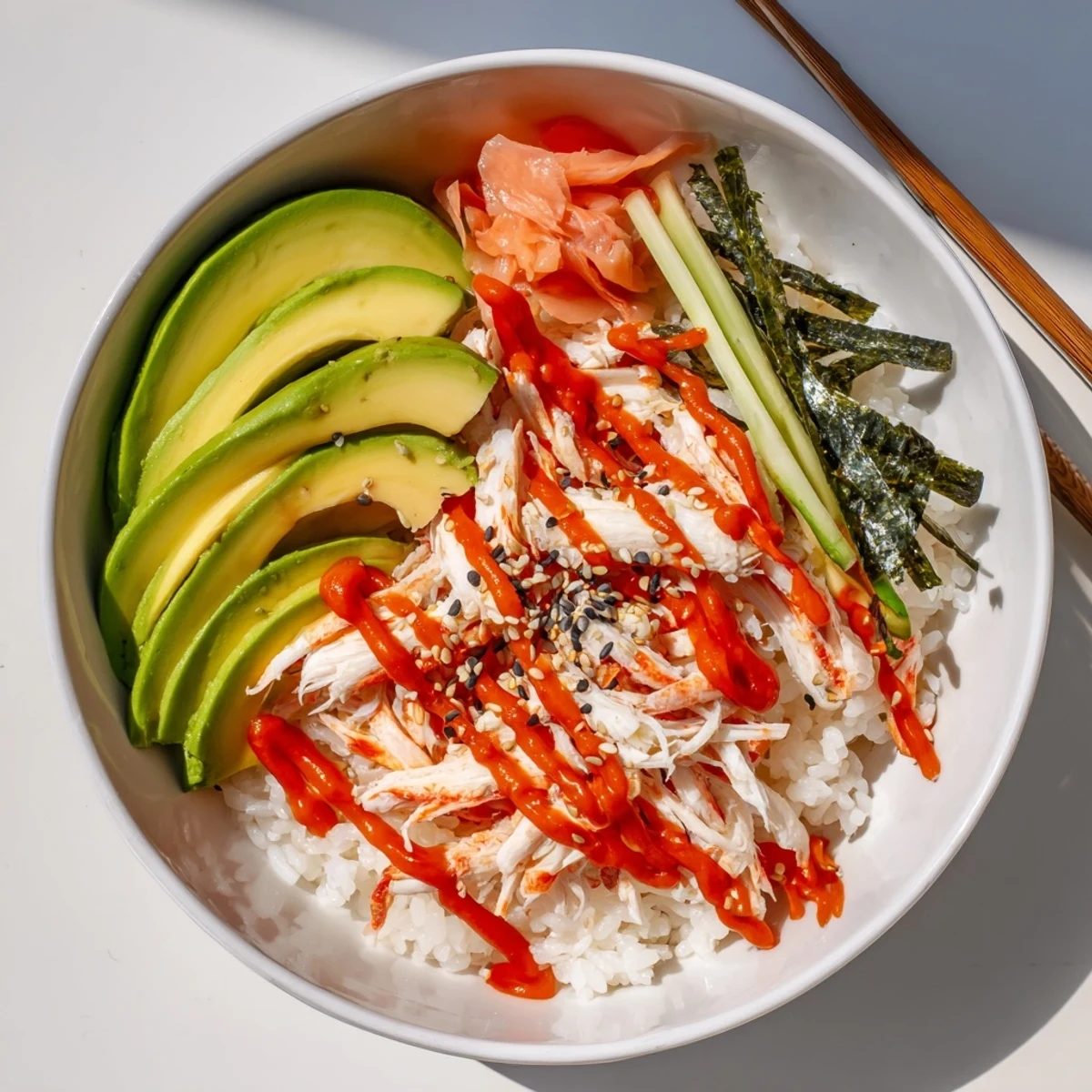
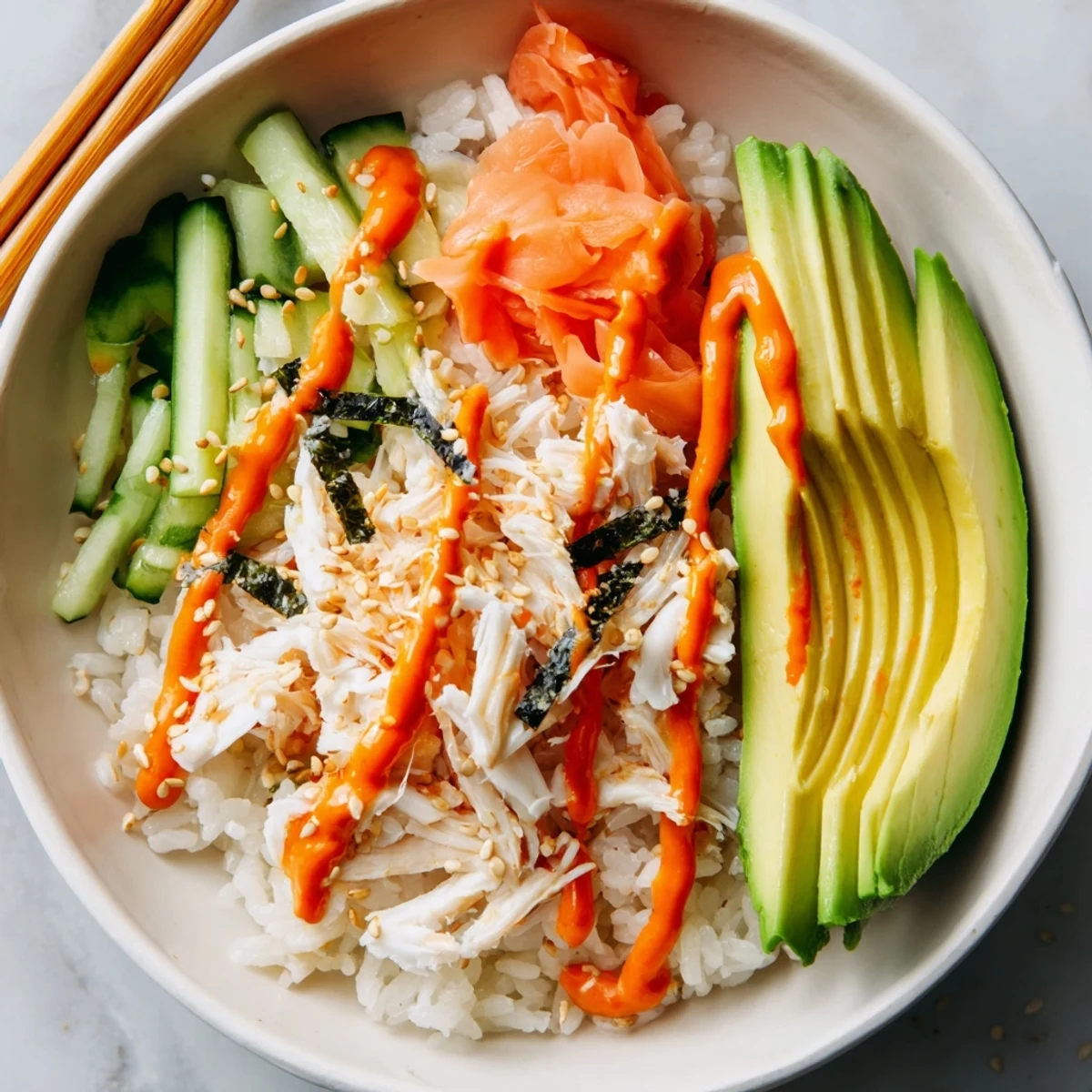
- Spoon seasoned rice into serving bowls as your base, then arrange shredded crab, avocado slices, cucumber, julienned carrot, and nori strips on top in whatever pattern pleases you. There is no wrong way to do this, just try to distribute colors evenly for visual impact.
- Finish and serve:
- Drizzle spicy mayo generously over the top, scatter toasted sesame seeds across everything, and serve with pickled ginger and soy sauce on the side. Eat immediately because the avocado and nori both lose their ideal texture after sitting too long.
 Save to Pinterest
 There is something deeply satisfying about assembling a bowl like this, arranging each topping in its own little section, creating something beautiful out of simple ingredients. It turns an ordinary Tuesday into a small act of care for yourself or whoever happens to be lucky enough to share your table.
Making It Your Own
This bowl is a blueprint more than a rulebook, and I have made it differently almost every time depending on what the fridge offered that day. Cooked shrimp, seared tuna, or even crispy tofu all work beautifully in place of the imitation crab. Throw on some edamame or sliced radishes when you want extra crunch and color without much extra effort.
Serving and Pairing Ideas
A chilled sake or a crisp glass of dry white wine alongside this bowl turns a casual dinner into something that feels intentionally special, even on a random weeknight. I have also served these at casual gatherings where everyone builds their own bowl from a spread of toppings, and it always sparks conversation and happy grazing. People love the control of choosing exactly what goes on their rice.
Allergen and Dietary Notes
Surimi typically contains fish and sometimes wheat, so check packaging carefully if gluten is a concern for you or your guests. The mayonnaise brings eggs into the equation, and soy sauce contains soy and often wheat as well, so use gluten free tamari if needed. Avocado can trigger reactions for those with latex fruit syndrome, which is rare but worth knowing about if you are cooking for a crowd.
- Swap regular soy sauce for tamari or coconut aminos to make this gluten free.
- Use vegan mayonnaise to make the spicy mayo completely plant based.
- Always double check surimi labels because brands vary widely in allergens and additives.
 Save to Pinterest
 Once you have this bowl in your rotation you will wonder why you ever bothered with rolling mats and fussy technique at all. It is comfort, color, and crunch in a single bowl, and it always leaves people happy.
Recipe FAQ
- → How do I make the sushi rice sticky without overcooking?
-
Rinse the rice until the water runs clear, use a 1:1.33 to 1:1.5 rice-to-water ratio, simmer covered for 15 minutes, then let rest covered for 10 minutes. Fold in seasoned rice vinegar gently to keep grains glossy and slightly sticky.
- → Can I swap imitation crab for other proteins?
-
Yes. Substitute cooked real crab, peeled shrimp, or firm tofu for different textures and flavors. Adjust seasoning and cook times only if switching to raw seafood—use cooked proteins for quick assembly.
- → What makes the spicy mayo creamy and balanced?
-
Use a smooth Japanese-style mayonnaise (like Kewpie) and start with a small amount of sriracha, tasting as you go. A squeeze of lemon or a touch of rice vinegar can brighten the heat without thinning the mayo.
- → How should I store leftovers to retain texture?
-
Store components separately if possible: rice in an airtight container at room temperature briefly, toppings chilled. Reheat rice gently and assemble fresh to avoid sogginess; consume within 24 hours for best texture.
- → Any tips for making this gluten-free?
-
Choose gluten-free soy sauce or tamari and check the surimi label for wheat. Opt for mayonnaise and other condiments labeled gluten-free to keep the bowl safe for gluten-sensitive diners.
- → What simple garnishes elevate the bowls?
-
Toasted sesame seeds, thinly sliced nori strips, pickled ginger, sliced radishes, or a drizzle of sesame oil all add aroma, crunch, and contrast without extra fuss.