
 Save to Pinterest
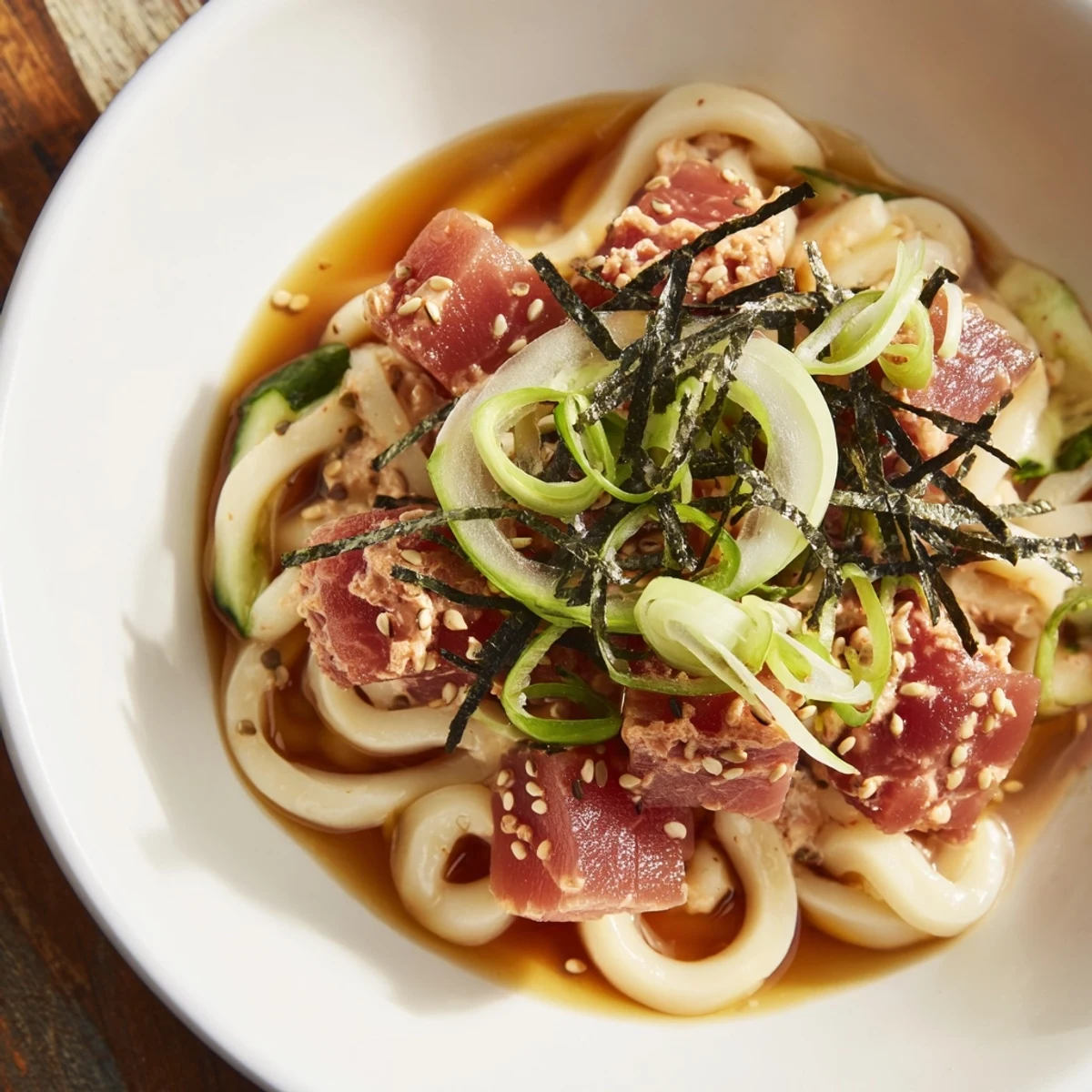
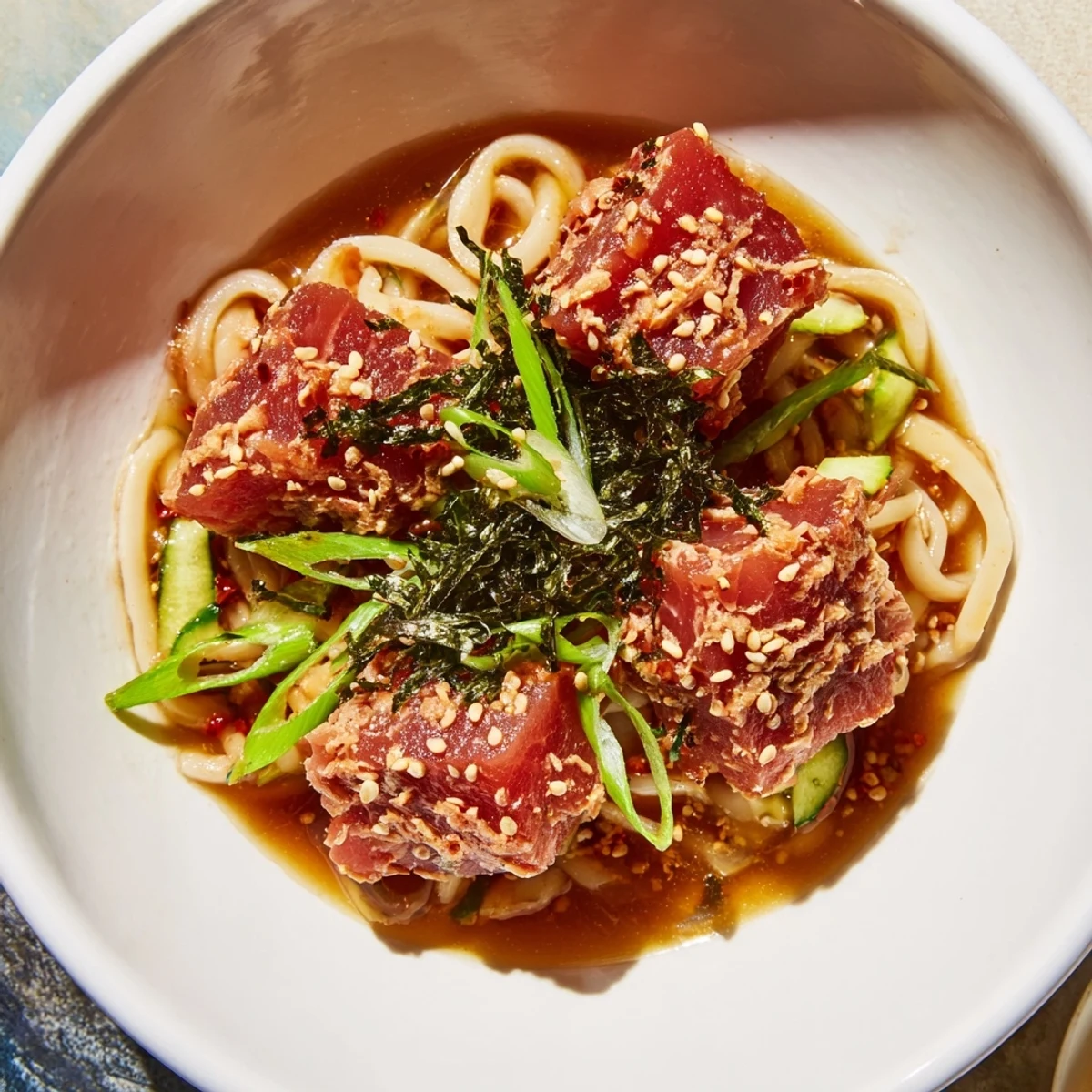
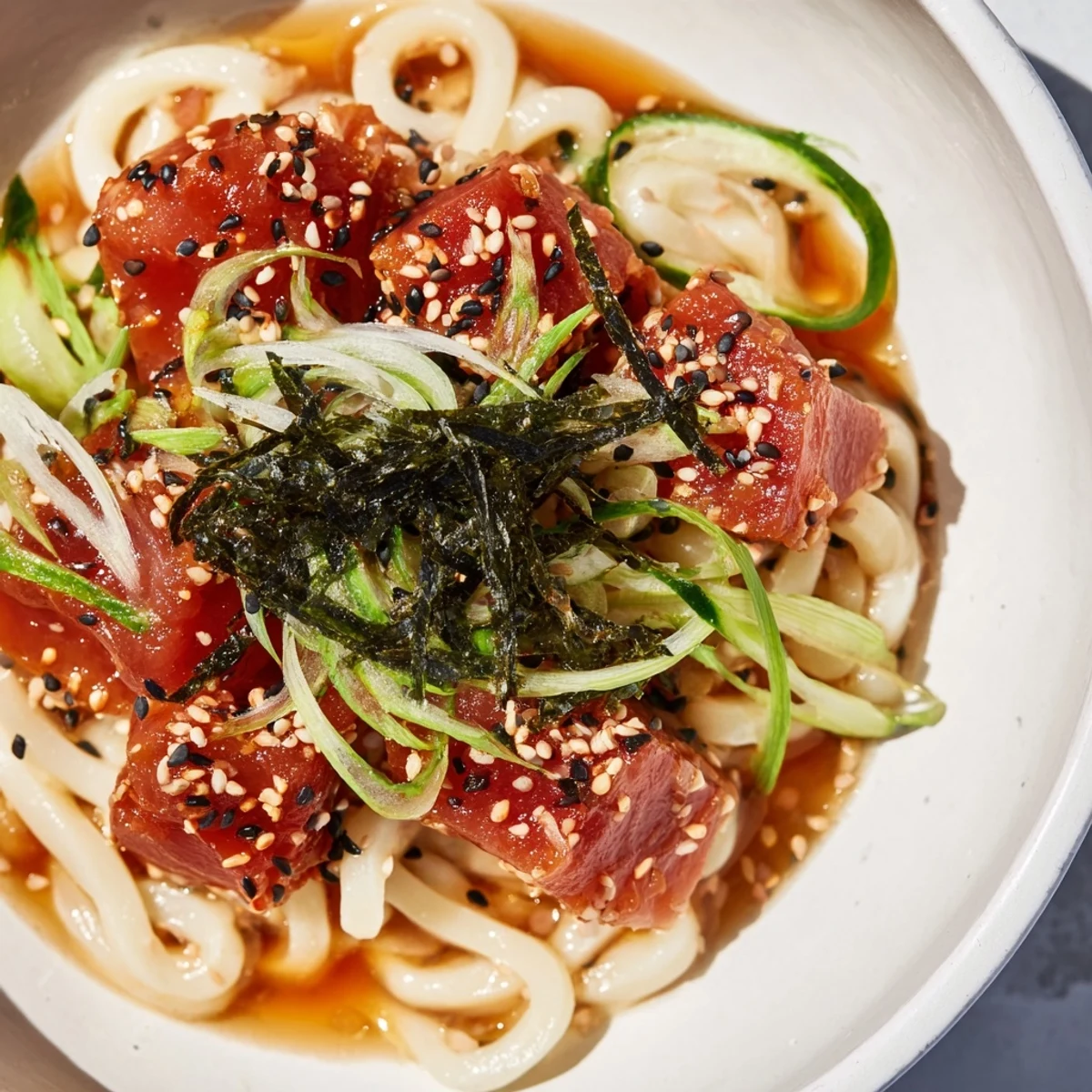
 This comforting Japanese-inspired bowl features chewy udon noodles swimming in a seasoned dashi broth, topped with silky spicy tuna that's been marinated in a creamy sriracha blend. Fresh green onions, crisp cucumber, and nutty sesame seeds add layers of texture and flavor. The dish comes together quickly, making it perfect for weeknight dinners when you want something nourishing yet exciting.
The exhaust fan above my stove was working overtime the evening I threw this bowl together, steam curling up and fogging the kitchen window while rain hammered the glass outside. I had bought a block of sushi grade tuna on impulse, something I rarely do, and stood there dicing it with cold hands wondering what exactly I was getting myself into. Twenty five minutes later I was crouched over the counter slurping noodles straight from the bowl because I could not wait to sit down. The broth had that deep savory pull and the tuna had just enough heat to make my nose run in the most satisfying way.
My roommate walked in halfway through my second bowl, peered into the pot, and declared she was not a raw fish person. I made her one anyway with the tofu swap and she quietly ate the whole thing standing at the counter, then asked if there was more.
Ingredients
- Sushi grade tuna (200 g, diced): Please do not skip on quality here, the texture and safety of raw tuna depends entirely on sourcing it from a trusted fish counter.
- Mayonnaise, preferably Kewpie (2 tbsp): Japanese mayo has a richer yolk content and tang that regular mayo simply cannot replicate for this marinade.
- Sriracha or Asian chili sauce (1 tbsp): Start with this amount and taste before adding more, you can always ramp up the heat but you cannot undo it.
- Soy sauce (1 tsp for marinade, 1 tbsp for broth): I use a lighter soy for the marinade so it does not overwhelm the delicate tuna flavor.
- Sesame oil (1 tsp): A little toast goes a long way and gives the tuna that rounded nutty finish.
- Rice vinegar (1 tsp): Just a splash to brighten and balance the richness of the mayo.
- Udon noodles (400 g fresh or frozen): Fresh udon have a chew that dried noodles never quite achieve, but frozen vacuum packed ones are a perfectly fine shortcut.
- Dashi broth (3 cups): This is the backbone of the whole bowl, and if you cannot find dashi, chicken or vegetable broth works in a pinch though you lose some of that ocean depth.
- Mirin (1 tbsp): Adds a gentle sweetness that rounds out the salty soy in the broth.
- Sugar (1 tsp): Just enough to soften the edges of the seasoning.
- Sliced green onions (1/2 cup): Slice them on a sharp diagonal for visual appeal and a cleaner bite.
- Shredded nori (1/2 cup): I crumble sheets with my fingers but pre shredded packs exist if you want to save time.
- Toasted sesame seeds (1 tbsp): Toast them in a dry pan for about thirty seconds until they smell like popcorn.
- Julienned cucumber (1/2 cup): Adds a cool crisp crunch that tames the spice beautifully.
- Optional chili oil and pickled ginger: For those who want to go even further, a drizzle of chili oil at the end is transformative.
Instructions
- Marry the tuna:
- Dice the tuna into small even cubes and fold it gently with the mayonnaise, Sriracha, soy sauce, sesame oil, and rice vinegar in a mixing bowl, then tuck it into the fridge for at least ten minutes so the flavors settle.
- Cook the udon:
- Boil the noodles in a generous pot of water according to the package directions, then drain and give them a quick rinse under cold water so they do not turn gummy while waiting.
- Build the broth:
- In a separate saucepan warm the dashi with soy sauce, mirin, and sugar, bringing it to a gentle simmer without letting it reach a full rolling boil.
- Assemble the bowls:
- Divide the noodles between two deep bowls and ladle the hot broth over them, watching the noodles relax and separate as the liquid surrounds them.
- Crown with tuna:
- Spoon the chilled spicy tuna right on top of the steaming noodles, letting the temperature contrast do its magic.
- Garnish generously:
- Scatter green onions, shredded nori, sesame seeds, and cucumber over each bowl, adding chili oil or pickled ginger if you are feeling bold.
- Serve immediately:
- Hand out chopsticks or large spoons and eat while the broth is still piping hot because this bowl waits for no one.
 Save to Pinterest
 There is something about holding a warm bowl in both hands when the weather outside is miserable that makes everything feel manageable.
Timing and Pacing
The beauty of this recipe is that most of the work is waiting rather than active cooking, so set a timer for the tuna marinade and use those ten minutes to prep your toppings and get the broth going. Everything lands on the table at once if you coordinate the noodles and broth to finish around the same minute.
Swaps and Substitutions
If raw fish is not your thing, seared tuna sliced thin works beautifully and adds a lovely charred edge. Firm tofu pressed and cubed is the vegetarian route, and I have even used leftover shredded chicken on nights when that was what the fridge offered.
Serving and Storing
This dish is strictly a eat it now situation because the noodles soak up the broth and the tuna loses its fresh bite overnight.
- If you must prep ahead, keep the broth, noodles, tuna, and toppings in separate containers and assemble only when ready to eat.
- The tuna marinade actually improves after a couple hours in the fridge, so making it earlier in the day is a smart move.
- Never reheat the assembled bowl or you will cook the tuna and ruin the whole point.
 Save to Pinterest
 Keep this one in your back pocket for nights when you need dinner fast but still want to feel like you treated yourself to something special.
Recipe FAQ
- → What type of tuna should I use?
-
Use sushi-grade tuna for safe raw consumption. If you prefer not to eat raw fish, substitute with seared or canned tuna.
- → Can I make this dish vegetarian?
-
Yes, replace the tuna with firm tofu cubes marinated in the same spicy sauce. Use vegetable broth instead of dashi.
- → How spicy is this dish?
-
The spice level is moderate and customizable. Start with 1 tablespoon of Sriracha and adjust to your preference by adding more or less.
- → Can I use different noodles?
-
While udon provides the traditional thick, chewy texture, you can substitute with soba, ramen, or rice noodles if preferred.
- → How long can I store the leftovers?
-
Store components separately in the refrigerator for up to 2 days. Keep the tuna marinated but add it to hot noodles just before serving.