
 Save to Pinterest
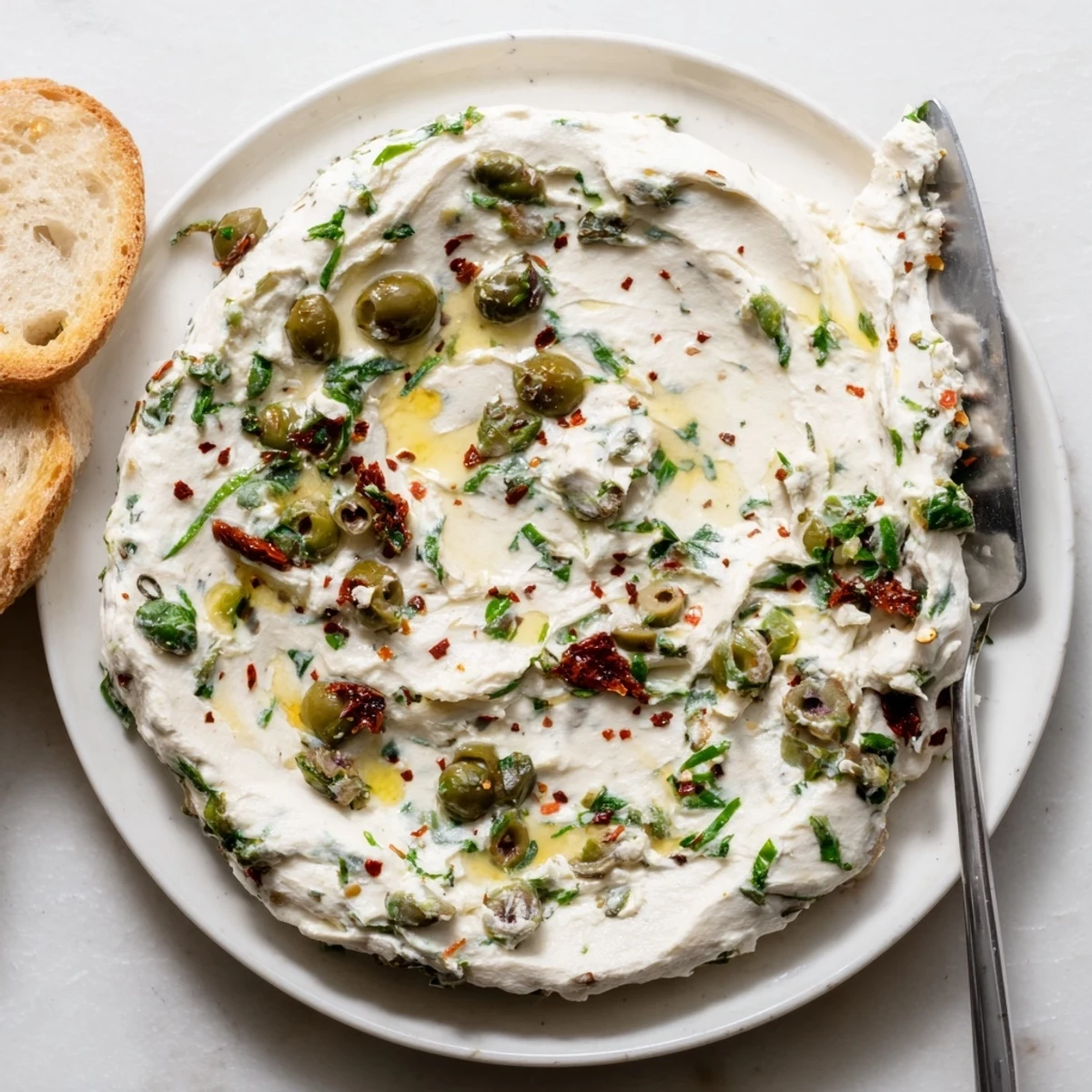
 This Italian olive and cheese spread brings together softened cream cheese, mascarpone, and freshly grated Parmesan into a silky, creamy base.
Green and black olives add a briny contrast, while sun-dried tomatoes, garlic, and fresh basil and parsley layer in aromatic depth.
With just 10 minutes of prep and no cooking required, it's an effortless appetizer perfect for entertaining, sandwiching, or snacking with crusty bread.
My friend Marco tossed a jar of olives across the kitchen one rainy Tuesday and declared that my snack game was embarrassing. That challenge led to a spread so good it disappeared before the pizza even came out of the oven. Now it shows up at every gathering without fail.
I once watched my mother in law eat an entire bowl of this before dinner and blame the dog. We still laugh about it every holiday.
Ingredients
- Cream cheese (120 g, softened): Let it sit out for at least thirty minutes because cold cream cheese fights you every step of the way.
- Mascarpone cheese (60 g): This is the secret weapon that makes the spread silky instead of dense.
- Freshly grated Parmesan cheese (60 g): Please grate it yourself since the pre grated stuff coats everything in powder and never melts the same.
- Green olives, pitted and finely chopped (80 g): Their bright saltiness cuts right through the richness of the cheeses.
- Black olives, pitted and finely chopped (80 g): These bring a milder earthy depth that balances the sharper green ones.
- Sun-dried tomatoes, finely chopped (2 tbsp): A little sweetness goes a long way here to round out all the brine.
- Garlic, minced (1 clove): One clove is plenty because raw garlic can easily hijack the whole bowl.
- Fresh basil, finely chopped (2 tbsp): Tear it by hand if you are in a hurry since a knife can bruise the leaves black.
- Fresh parsley, finely chopped (1 tbsp): Adds a clean grassy note that keeps the spread tasting fresh.
- Extra virgin olive oil (1 tbsp): Use the good stuff here since you are not cooking anything and the flavor shines through raw.
- Crushed red pepper flakes (1/4 tsp, optional): Just a whisper of heat makes everything else taste more vibrant.
- Freshly ground black pepper, to taste: Give it a generous crack since the cheese can handle bold seasoning.
Instructions
- Bring the cheeses together:
- Plop the softened cream cheese, mascarpone, and Parmesan into a medium bowl and stir with a spatula until you have a smooth unified base with no stubborn lumps hiding in the corners.
- Fold in the flavor:
- Add both olives, the sun-dried tomatoes, garlic, basil, parsley, olive oil, and red pepper flakes then fold gently so the pieces distribute evenly without turning the whole thing muddy.
- Taste and adjust:
- Season with freshly ground black pepper, stir once more, and trust your palate because the olives and Parmesan are already salty enough that extra salt is rarely needed.
- Let it rest:
- Scrape everything into a serving dish, cover it tightly, and tuck it into the fridge for at least an hour so the flavors settle into each other properly.
- Serve it up:
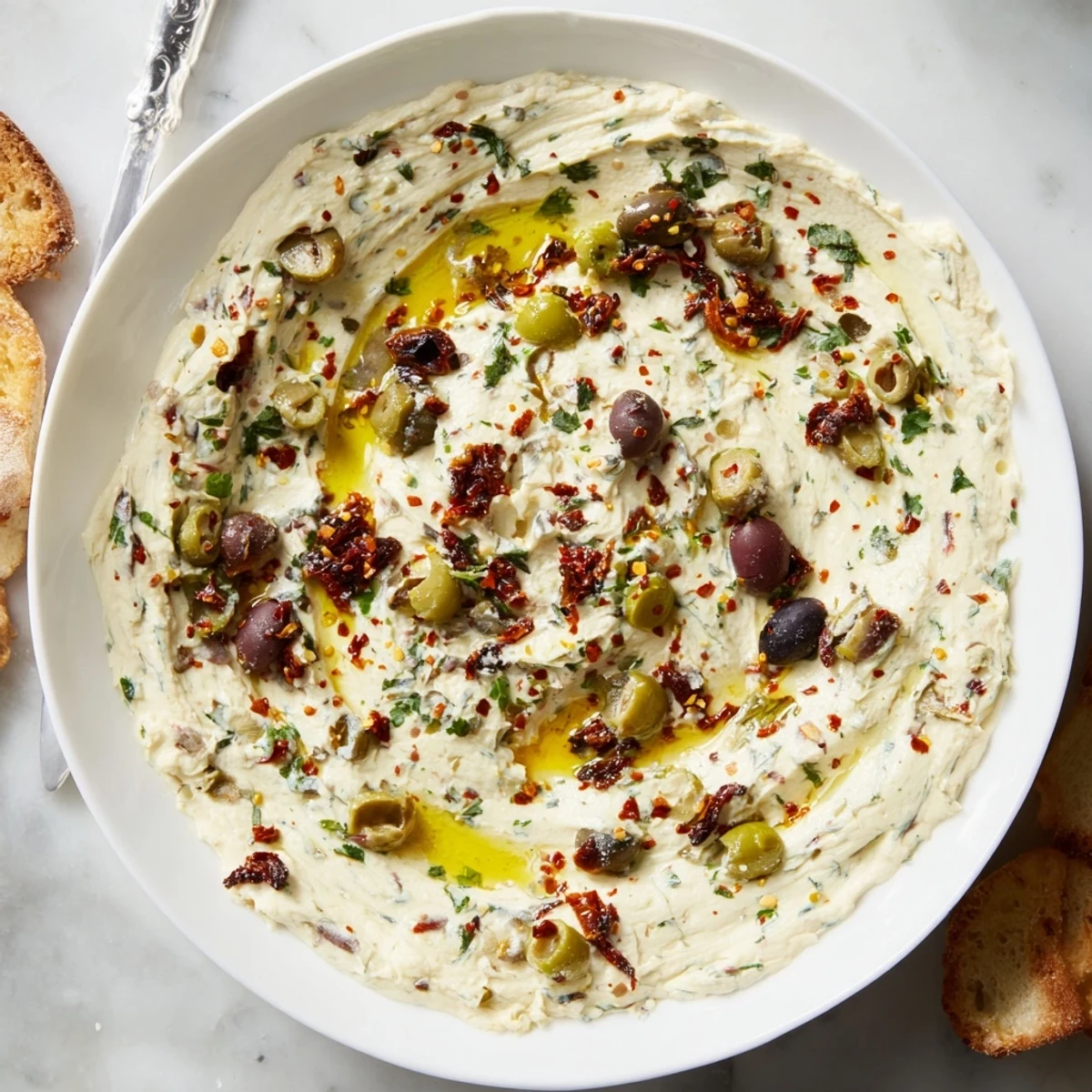
- Pull it out fifteen minutes before guests arrive so it softens slightly, then set it alongside crusty bread, crostini, or whatever crackers you have hiding in the pantry.
 Save to Pinterest
 The night this spread officially earned a name was when my neighbor knocked on the door asking for the recipe before she even finished saying hello.
Serving Ideas Worth Trying
Spoon it generously into halved mini bell peppers for a colorful bite that disappears fast. It also makes an incredible sandwich spread layered with roasted vegetables and a drizzle of balsamic. For a more elegant presentation, pipe it into endive leaves and arrange them on a long board.
Swaps and Tweaks
Ricotta works beautifully in place of mascarpone if you want something lighter and slightly more structured. A handful of toasted pine nuts folded in at the end adds a nutty crunch that makes people ask what your secret is. You can also swap the basil for fresh oregano if you are leaning into a more Mediterranean direction.
Keeping It Fresh
Store any leftovers covered tightly in the refrigerator for up to four days though it rarely lasts that long in my house. The olive flavor intensifies overnight which is actually a bonus if you ask me.
- Stir it well before serving again since some liquid may pool on top.
- Do not freeze it because the texture breaks and gets grainy.
- Always use a clean spoon to scoop out portions so it stays fresh longer.
 Save to Pinterest
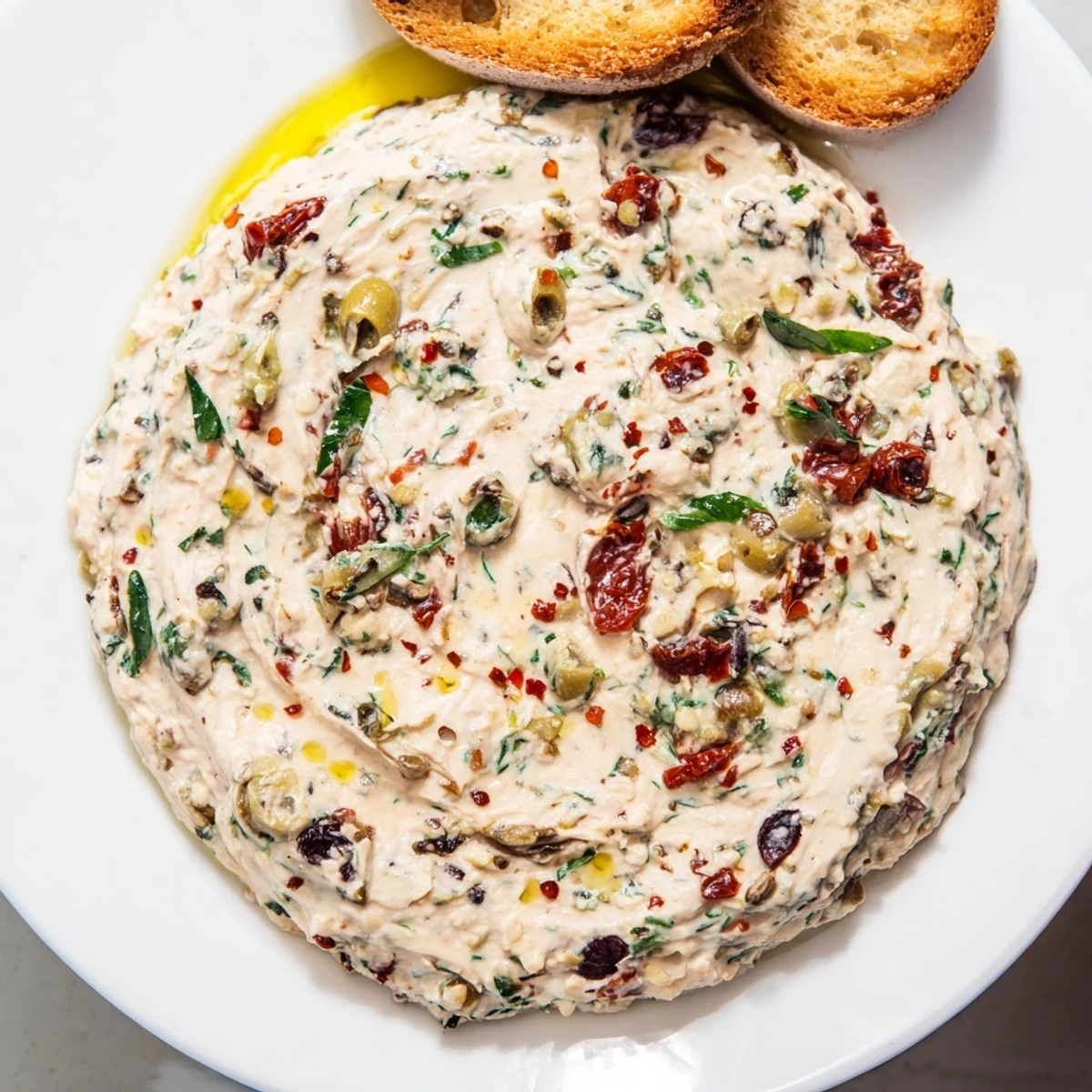
 Some recipes become staples because they ask almost nothing of you and give back everything. This is one of those, and I hope it earns a permanent spot at your table too.
Recipe FAQ
- → Can I make this spread ahead of time?
-
Yes, this spread actually benefits from resting. Prepare it up to 2 days in advance and refrigerate in an airtight container. The flavors meld and deepen as it sits, making it even more delicious.
- → What type of olives work best?
-
A combination of green and black olives provides the best balance of briny, buttery, and tangy flavors. Castelvetrano, Kalamata, or Manzanilla olives are all excellent choices. Just be sure to pit and finely chop them before mixing in.
- → What should I serve with this spread?
-
Crusty baguette slices, crostini, and crackers are classic pairings. It also works beautifully as a sandwich condiment, a stuffing for celery, or dolloped onto grilled vegetables. Pair with a crisp Pinot Grigio or Prosecco for a complete appetizer experience.
- → Can I substitute the mascarpone cheese?
-
Ricotta is a great lighter alternative to mascarpone and will yield a slightly fluffier texture. You could also use softened goat cheese for a tangier flavor profile. Adjust seasoning as needed after substituting.
- → How long does this spread keep in the refrigerator?
-
Stored in an airtight container, the spread will keep for up to 4 days in the refrigerator. Let it sit at room temperature for about 15 minutes before serving to soften and allow the flavors to come through.
- → Is this spread suitable for vegetarians?
-
Yes, all ingredients in this spread are vegetarian. However, check your Parmesan packaging—some traditional Parmigiano-Reggiano uses animal rennet. Look for a vegetarian-certified hard cheese if this is a concern.